Rust solo survival explained through Blooprint's 14-day Apex Survivor run
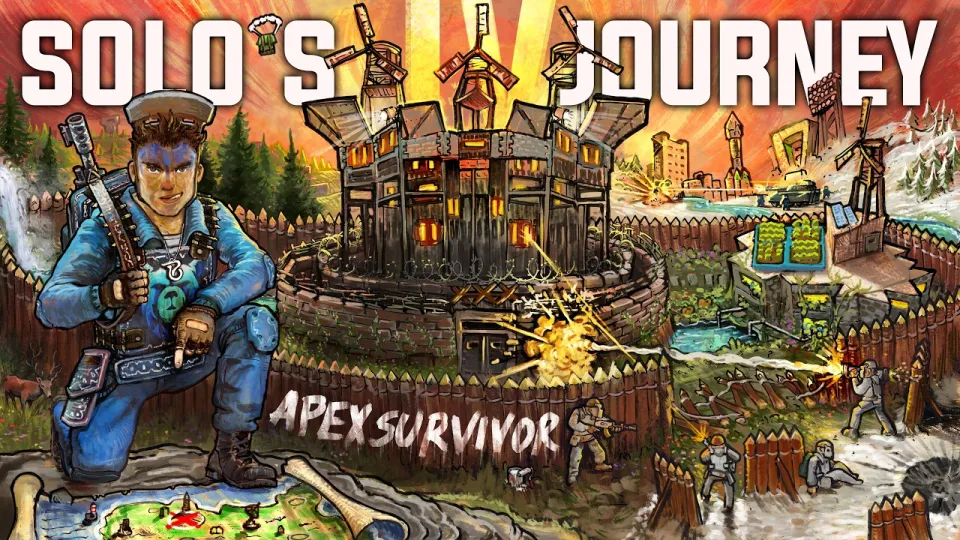
Video: Rust - A Solo's Journey IV: Apex Survivor (Movie)
Want articles like this for your own video to promote it on YouTube and Google? Order them through the Telegram bot @sat_sit_bot. The bot writes and publishes the articles itself (with your YouTube video embedded) on popular topical websites (no ads). Try it free: 50 articles on us.
· based on the channel Blooprint
Rust solo survival is the practice of playing Facepunch's survival shooter alone on a live server, and Blooprint's "A Solo's Journey IV: Apex Survivor" is the clearest recent demonstration of what that actually costs: 14 days on one wipe, more than 300 hours of filming and editing, and a finished movie that runs 4 hours and 50 minutes. The full checklist of what happened during those two weeks is published on the Solo's Journey tracker site, where you type in a timestamp and see the player's progress at that point.
What the Apex Survivor run actually is
The Apex Survivor movie is a solo Rust wipe documented from first spawn to final base state, not a highlight reel of scattered fights. Blooprint filmed and edited the project himself and released it in twelve numbered chapters plus a closing segment, with the intro at the top and "The End" at the very bottom of the chapter list. The stated goal was to mark 2.5 million subscribers with something bigger than a standard upload, and the description calls it a rare format for the channel.
The structure matters for anyone trying to learn from it. A 14-day solo wipe on a populated Rust server is a long-form problem: you have to keep a base alive, keep blueprints progressing, and keep enough gear to contest monuments while every neighbouring group grows faster than you do. Splitting that into chapters mirrors how the wipe actually feels — early primitivity, mid-wipe expansion, late-wipe raids and revenge.
How a solo player survives two weeks on one Rust server
Surviving a long solo wipe in Rust comes down to sequencing: secure a base before you chase loot, and secure loot before you chase fights. The run's checklist format suggests a mission-based approach, and that is the sane way to play solo — treat each session as a set of concrete objectives rather than an open-ended grind.
- Establish a starter base away from the busiest monument traffic, then upgrade to stone and sheet metal before the first night cycle ends.
- Farm components and scrap in short, repeatable loops instead of long expeditions that risk a full inventory.
- Push monument progression in order — low-tier monuments for scrap, then higher-tier ones once you can afford to lose a kit.
- Bank blueprints early; a solo player's real progress bar is the workbench tree, not the loot in the box.
- Keep a second, smaller stash base so a single raid does not end the wipe.
Solo Rust punishes greed more than it punishes bad aim. A player alone cannot trade kills for time the way a clan can, so every fight has to be worth the kit it costs.
Bases, farming and the triangle core debate
Base design is where solo Rust players argue most, and the Apex Survivor run leans into an unconventional layout rather than a meta copy. Viewer discussion of the movie focused on a triangular core design that is not considered optimal by current building standards, paired with a farm base that carried its weight. The takeaway is practical: a slightly inefficient core that you can actually build, afford and defend beats a perfect blueprint you never finish as a solo.
Farming is the other half of that equation. Solo players on a long wipe need automated or semi-automated resource income — planters, furnaces running constantly, and disciplined component sorting — because manual farming cannot keep pace with groups of four or more. Cloning and farming setups drew specific praise from viewers who watched the whole run, which tracks: on a 14-day wipe, the player who farms efficiently outlasts the player who farms heroically.
PvP, raids and revenge in a solo wipe
PvP in solo Rust is asymmetric by design, and the movie's most discussed moments sit exactly where that asymmetry breaks. A solo player cannot win a straight numbers fight, so the wins come from positioning, third-partying and picking fights near cover you control. The run includes raid sequences and a revenge arc, which is the classic solo storyline: get pushed off a monument or a base, rebuild, and come back with a plan.
One recurring theme in viewer reaction is the value of restraint. Comments singled out a neighbouring clan's downfall as a deserved raid, and praised a group that behaved decently rather than toxically. For solo players, reputation on a server is a resource — the neighbour who does not hunt you on sight is worth more than a box of explosives.
What viewers questioned about the format
The most common scepticism around a movie this long is pacing, and the answer is the chapter structure plus the tracker. Because the run is split into twelve labelled chapters, you can watch a single phase of the wipe — early game, mid-wipe expansion, the raid finale — without committing to the full runtime. The tracker at solosjourneytracker.com exists for the same reason: it converts a timestamp into a progress snapshot so viewers can jump in and out.
The second recurring question is whether the run is representative. It is not a beginner tutorial; it is a documented high-effort solo wipe with heavy editing, so the fights are selected and the downtime is compressed. What transfers to your own server is the decision-making — when to farm, when to fight, when to abandon a base — rather than the exact gear or timing.
Useful links from the video
Everything referenced in the movie and its description, copied exactly:
- Solo's Journey progress tracker: https://solosjourneytracker.com
- Blooprint vinyl figure (available until October 27): https://youtooz.com/products/blooprint
- Solo's Journey mousepads and playmats (available until January 3): https://epicdesk.shop/collections/blooprint
- Animated intro studio: https://x.com/highresolution0
- Thumbnail artist: https://twitter.com/veys_el_kara
Final takeaway
The Apex Survivor movie is the strongest argument that solo Rust is a strategy game wearing a shooter's clothes: 14 days of decisions about farming, base placement and when to take a fight, compressed into a single long-form film. Blooprint, the channel behind the project, built both the run and the tooling around it, which is why the video functions as a reference for solo players rather than just entertainment. If you want to follow the wipe step by step, open the Solo's Journey tracker, enter a timestamp, and see exactly what stage of the run you are watching.
Key takeaways
- Blooprint survived 14 real days as a solo on a Rust server and cut the run into a 4-hour-50-minute movie split across 12 chapters plus an epilogue.
- The edit took more than 300 hours of filming and editing, according to the video description.
- A dedicated tracker at solosjourneytracker.com lets viewers type a timestamp and see the player's progress at that exact moment.
- The run was published to mark 2.5 million subscribers on the channel.
- Solo Rust means no clan support: every farm run, raid defence and wipe recovery is handled by one player.
Source: Rust - A Solo's Journey IV: Apex Survivor (Movie) · Markdown version
Questions & answers
How long does it take to watch the full Apex Survivor Rust movie?
The video runs 4 hours, 50 minutes and 42 seconds, split into twelve chapters plus an intro and an ending segment. Because the chapters are labelled, you can watch a single phase of the wipe instead of the whole thing.
Is the run a good guide for a beginner solo Rust player?
It is better read as a decision-making reference than a tutorial. The footage is heavily edited and compresses downtime, so copy the sequencing — base first, blueprints next, fights last — rather than the exact timings.
What is the Solo's Journey tracker website for?
It is a progress checklist built specifically for this video. You enter your current timestamp and it shows what stage of the 14-day wipe the player had reached at that point.
Why do solo players build farm bases and cloning setups on long wipes?
Manual farming cannot keep pace with groups over two weeks, so passive resource income keeps a solo player's base and kits supplied. Farm bases also spread risk, since losing one structure does not end the wipe.